Copper
Polished Copper
Material Character
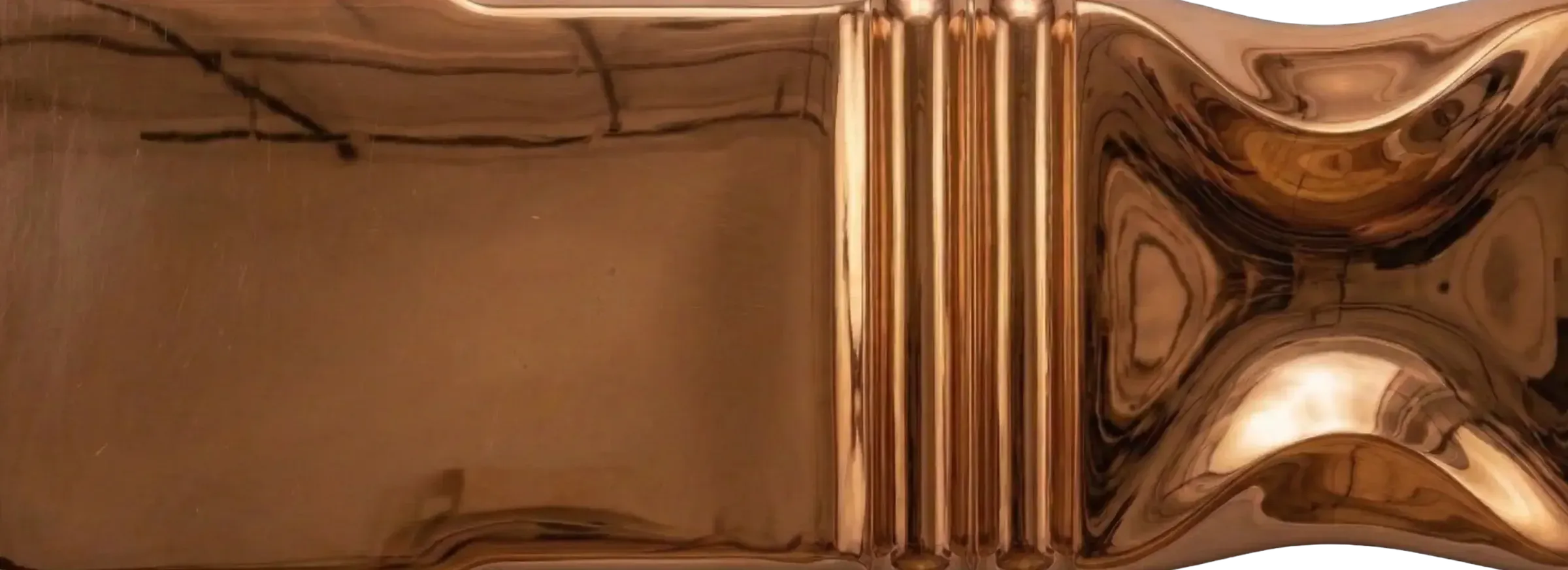
Polished Copper is a warm reflective copper finish with a high gloss sheen and a smooth, mirror-like surface character. It brings out the reddish-orange warmth of copper and gives it a brighter, more luminous presence than smoked, blackened, or brushed copper finishes.
The finish reacts strongly to light and surrounding materials. On flat areas, it can reflect the room around it; on sculpted profiles, curves, and ribbed details, the reflections become part of the form and give the surface a vivid, almost liquid visual quality.
Material Details
- Metal Family
- Copper
- Coating System
- Liquid Metal Coating – MetaliQMetal Finishes on Solid Metals
- Tone / Patina
- Warm copper, reddish-orange depth
Frequently Asked Questions
Start a projectWill every finished surface look exactly the same?
Before production, the finish should be reviewed through the finish catalogue, Modulux digital catalogue, or an ordered sample when the project requires one. For polished copper, it is especially important to check the scale of the element, the lighting around it, the expected touch level, and the maintenance approach.
How can I use this finish in my project?
Polished Copper works well when an architectural element needs warmth, shine, and a clear visual center. It can be considered for reception counters, lobby details, wall features, doors, frames, trims, furniture pieces, selected fronts, and decorative panels where reflection is part of the design.
This finish is strongest where the project wants a copper surface that feels bright, rich, and highly finished. In a lobby, reception area, feature wall, built-in furniture piece, or custom metal detail, Polished Copper can create a luxurious focal point without using a dark patina or aged effect.
How is this finish maintained?
Polished Copper should be selected with clear maintenance expectations. A glossy copper surface can show reflections, handling marks, and cleaning marks more clearly than brushed or patinated finishes, so the finish type, protection approach, and use conditions should be reviewed before production.
Routine cleaning should avoid abrasive materials and should follow the project-specific guidance confirmed with the finish. In high-touch areas, the final specification should take into account touch level, cleaning routine, lighting, and the approved finish sample.